
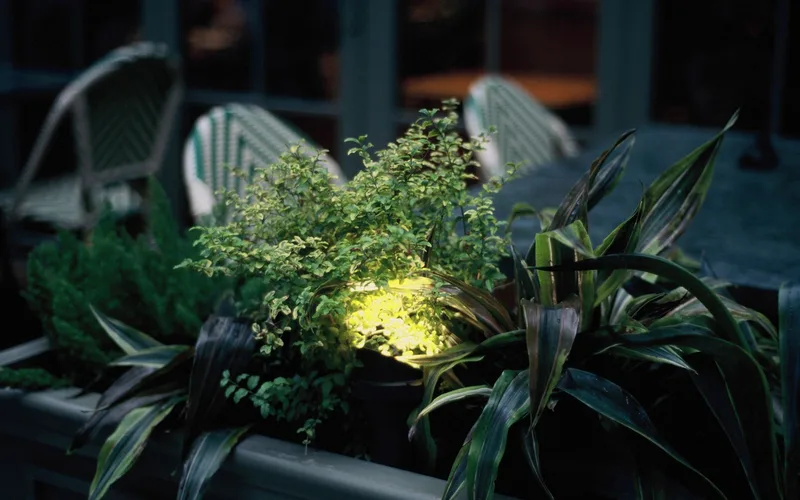
Choose patio lighting by sitting where people will eat or talk. Put one person at the table and another near the entrance. Look for the amount of light needed to see a plate, a face and the way back to the door. Ask for independently controllable seating and circulation light if you use those areas at different times.
Try the viewing positions that matter
Test the layout from the chairs nearest and farthest from the fixtures. Also stand at the patio edge where guests first step off the path. A fixture that feels comfortable overhead may be a bright point from a distant seat or reflected in the glass of a nearby door. Have the designer show what happens when it is aimed toward a specific surface or screened from view. DOE's glare research considers the apparent position of the source and the surrounding brightness.
Ask for a dining setting and a way out
Try the table at the light level you actually want for a meal. Then turn off or dim that group and check whether the route to the house remains easy to see. Identify any planting that needs an accent and decide when it will go dark. DarkSky and IES give examples of aiming light toward its purpose and limiting how long it runs. Ask for one more comparison after furniture is in place, since seats and their angle change where people look.
Use the glare and spill walk-through if a seat faces a bright source. Put each separate group on the controls list.