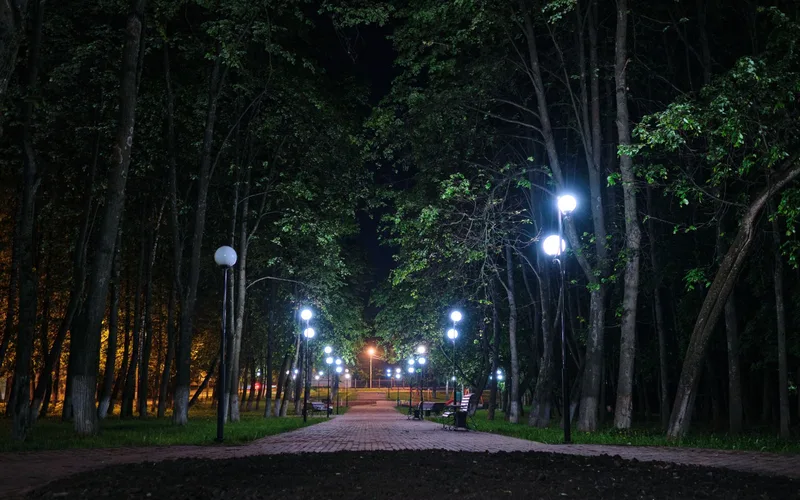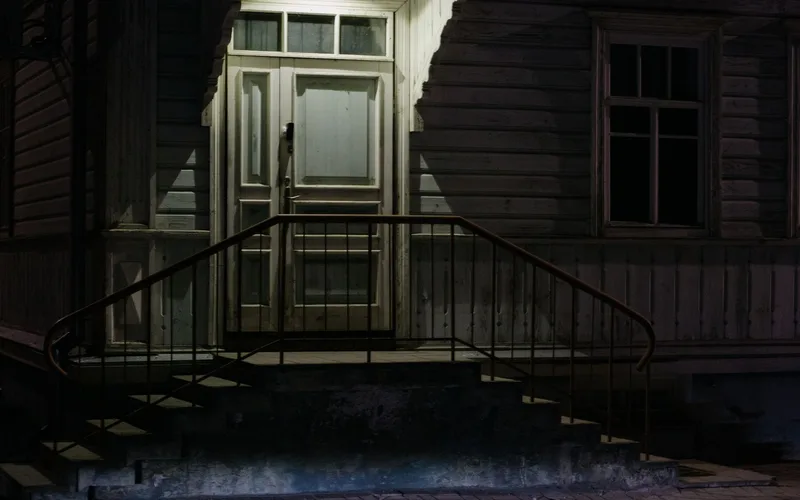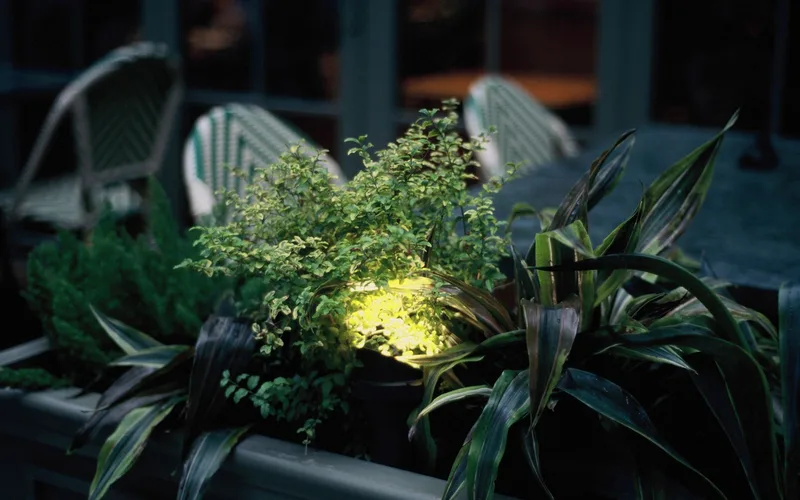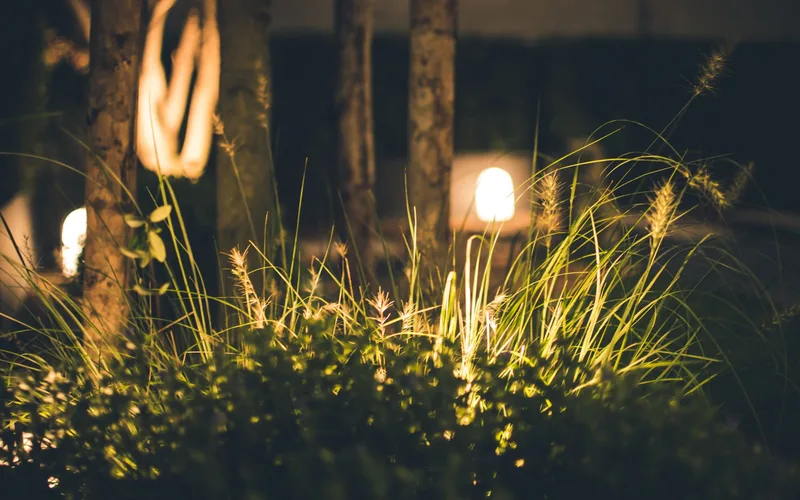
Plan outdoor lighting around the places people walk, enter and sit after dark. A Chicago-area yard may need a visible step, a legible turn toward the gate and a little light at a table. Walk those routes first. Mark the surface or object each light needs to reach, when you use it and where you want the light to stop. DarkSky and IES describe how to give each light a purpose, aim it and control when it runs.
Start where people move
Walk the same route from the sidewalk or driveway that a visitor would use. Plan a path walk-through to identify turns and surface changes. Then look at steps from both directions and give the designer the sightlines where edges disappear. For a change in level that already feels unsafe, arrange a professional assessment and choose a safer route in the meantime.
Set the scene from the chairs
Plan patio and seating light from both a chair and the approach. If the view from a seat or window includes a bright point, work through glare and spill before adding fixtures. The Department of Energy's work on light at night considers visibility alongside effects on the night sky and wildlife.
Compare the plan and the handoff
Choose how timers, daylight sensors and motion sensors should behave. Then compare proposals on the same sketch and ask for a night visit to check the aiming. Have the installer show which controls you can change and whom to call about electrical work.