
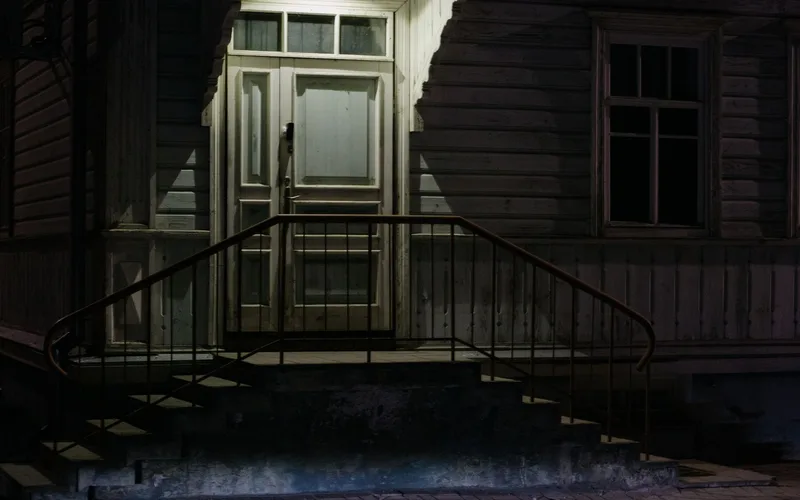
Review outdoor step lighting from the top and bottom before accepting a layout. Stand on stable ground with another person and look for the first edge, the last edge and the landing where people turn. Point out any place where a porch lamp shines into your eyes or your body casts a shadow on the next step. Use another route if you cannot see the footing safely.
Ask the installer to show the treads
Ask for a nighttime mockup with the door open and closed. Look at the step edges, the connection to the walkway and the surface where a person stops to unlock the door. Tell the designer which other lights normally run. The Department of Energy discusses markers and other ways to make curbs or steps visible. If the edges still blend together, ask whether a change in surface contrast can help and have the installer confirm local requirements for the stairs.
Plan for the way people arrive
If the lights respond to motion, ask the designer to show where they turn on for someone coming from the street and someone coming around the house. For steps that connect two areas, watch what happens while the person is waiting at the gate or door. Ask how to get steady light during a visit if the automatic setting is too brief. DarkSky and IES recommend controls that provide light when it is needed.
Start with the path approaching the steps and carry any arrival or manual-override questions into the controls plan.